Developed by Dr. Curtis Breville Liquid cooling changes an important assumption inside the data center: Fluid is now intentionally routed much closer to mission-critical IT equipment. That does not make leaks […]


Developed by Dr. Curtis Breville Liquid cooling changes an important assumption inside the data center: Fluid is now intentionally routed much closer to mission-critical IT equipment. That does not make leaks […]

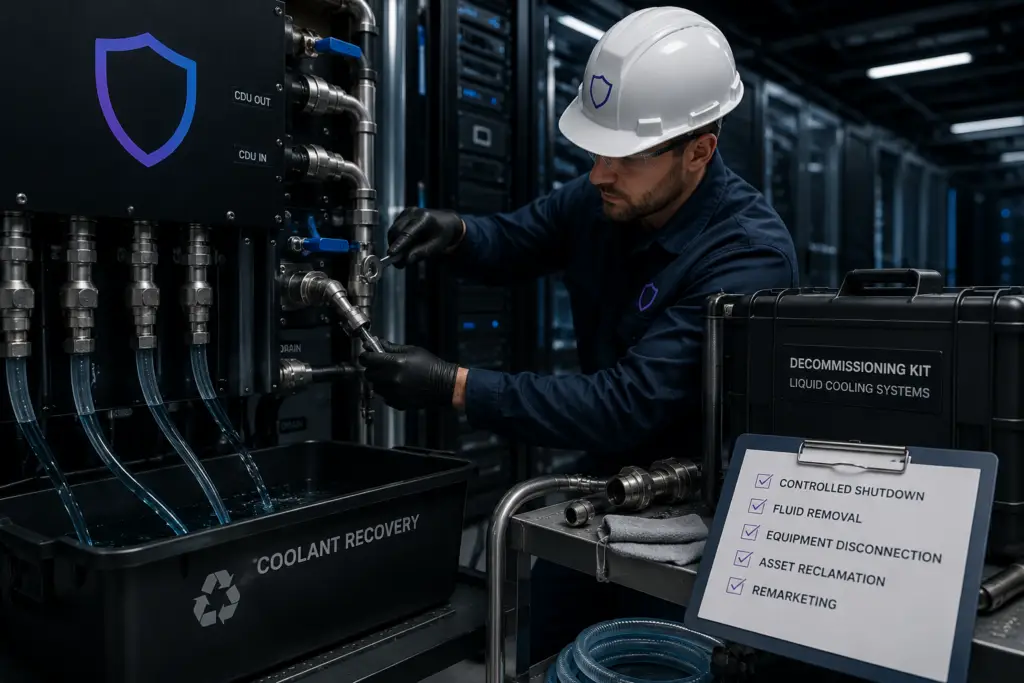
Developed by Dr. Curtis Breville The Next Challenge in Liquid Cooling Isn’t Deployment. It’s Retirement. The data center industry is rapidly learning how to deploy liquid cooling. Operators are sizing CDUs,

Developed in collaboration with Dr. Curtis Breville Looking Beyond Temperature, Pressure, and Flow Liquid cooling systems generate a significant amount of operational data. CDUs monitor temperatures, pressures, and flow rates.

Developed in collaboration with Dr. Curtis Breville Liquid coolant is far more than a heat transfer fluid As liquid cooling becomes standard for AI and high-performance computing deployments, most discussions still focus

Developed in collaboration with Dr. Curtis Breville Preparation—not panic—is what protects uptime. Most conversations about liquid cooling eventually arrive at the same concern: “What happens if there’s a leak?” It’s

Understanding the Fluids Behind Modern Data Center Cooling As AI workloads continue to drive higher rack densities, liquid cooling is becoming an essential part of modern data center design. Discussions

As liquid cooling becomes a standard part of high-density AI and HPC infrastructure Operators are paying close attention to servers, cold plates, CDUs, and fluid networks. But one of the
AI and ML infrastructure is changing the operating model for data centers. As high-density racks move deeper into production environments, the challenge is no longer just selecting liquid cooling hardware. The real challenge is

AI isn’t just a software story anymore. It’s a physics problem. New GPU platforms are pushing rack densities above 100 kW per rack, with roadmaps that point toward 200 kW,